How to Select Quality CV Joint Kits for Passenger Cars, SUVs and Light‑Duty Trucks
Case 2026-09-17
For auto‑parts wholesalers, import distributors and fleet procurement teams, CV joint kits represent one of the highest‑turnover drivetrain replacement parts. Passenger sedans, SUVs and light‑duty pickup trucks operate under very different stress levels. A CV joint kit performing reliably on city‑driven compact cars may develop clicking noises, excessive vibration or premature wear when fitted onto heavily‑loaded SUVs or light commercial pick‑ups running rough rural roads.
Many returned orders and warranty complaints do not stem purely from manufacturing defects. They happen because buyers select parts only according to vehicle make and model, without considering real‑world operating loads, critical mechanical parameters and complete kit configuration. Drawing on practical export experience supporting global aftermarket partners, this article breaks down key points for smarter CV‑joint‑kit bulk procurement.
Confirm Exact Fitment: More Than Just Year‑Make‑Model
Wrong fitment sits among the top causes of cross‑border CV‑joint‑kit returns. One vehicle platform can ship with multiple transmission options, drive‑shaft variants, ABS ring configurations and inner‑or‑outer joint distinctions. Parts that look visually similar can fail to engage properly once installed.
Follow these four fitment verification steps before confirming bulk SKUs:
- Cross‑reference multiple OE part numbers Collect original OE numbers from old joints, service manuals or official parts catalogues. Remember inner CV joint and outer CV joint carry separate OE codes. Never rely on a single OE reference for final confirmation.
- Use VIN decoding whenever documentation is available A 17‑digit VIN reveals factory‑original transmission setup, ABS‑ring requirements and drive‑shaft specifications. This avoids confusion caused by mid‑generation facelifts where two sub‑models under the same model name use completely different CV joint dimensions.
- Verify critical mechanical parameters When OE data or VIN records cannot be obtained, double‑check spline tooth count, spline bore size, ABS‑ring tooth quantity and snap‑ring groove position. Even one‑tooth difference on the spline will prevent proper assembly onto hub or differential side.
- Distinguish inner versus outer CV joint application Outer joints bear high steering‑angle stress during turning; inner joints absorb torsional vibration from the transmission. They are not interchangeable, even for the same vehicle axle.
Practical importer tip: If technical drawings are missing, ask suppliers to send clear photos of spline end, ABS ring and snap‑ring position of sample units for comparison against old original parts. Physical sample checking before mass production greatly reduces mismatch risks.
Match Product Grade Against Real‑World Operating Conditions
Different vehicle types bring completely different load requirements, which many wholesale buyers tend to overlook.
Standard passenger‑car CV joint kits suit daily commuter sedans running paved city and highway roads. These vehicles mostly face frequent turning and moderate torque output. Standard OE‑equivalent kits deliver smooth operation and acceptable service life for regular replacement jobs.
SUVs and light‑duty trucks create higher demands. Many of these vehicles carry passengers, cargo or occasional trailer loads. Poor‑grade CV joints will suffer accelerated ball‑race wear under increased torque, generating well‑known clicking noise during sharp turns or obvious vibration under acceleration. For markets with bad rural roads or frequent light towing, it pays to choose joints with higher fatigue‑resistance rather than generic passenger‑car grade.
Simple questions to evaluate each target SKU: ‑ Will these units fit daily‑driven sedans, loaded SUVs or light‑duty pick‑ups? ‑ Are local roads mostly smooth highway, or rough, dusty off‑road routes? ‑ Do local end‑users frequently use vehicles for towing extra weight?
Evaluate Core Quality Indicators of CV Joint Kits
Visual appearance cannot tell full quality performance, but several practical indicators help buyers judge sample quality before large‑volume orders.
1. Joint forging, heat‑treatment and machining finish
High‑quality CV joints adopt precision hot‑forged steel. Ball tracks and cage surfaces show uniform grinding finish without obvious tool marks or uneven texture. Inferior‑cost manufacturers cut corners on hardening depth; these joints develop pitting and metal spalling after relatively short mileage under load. For bulk projects, you can ask factories to provide material reports and hardness test records for sample batches.
2. CV boot material and clamping hardware
A durable CV joint heavily depends on its protective boot. Once the boot tears, dust, water and road salt get inside, and grease leaks out, destroying the joint in short order. Premium aftermarket kits use reinforced neoprene or thermoplastic Hytrel boots, offering good cold‑weather flexibility and anti‑aging performance. Cheap kits use thin recycled rubber, which cracks quickly under temperature cycling and UV exposure. Also check boot clamps. Reliable double‑ear crimp clamps hold sealing tension far better than simple worm‑gear hose clamps.
3. CV joint grease quality
Do not ignore the grease included inside the kit. Moly‑disulfide extreme‑pressure grease is required for constant‑velocity joints, resisting high pressure and friction heat. Some low‑cost kits add only small‑volume low‑grade grease. Even if the metal joint itself is well‑made, poor‑quality grease leads to premature wear. When reviewing samples, confirm grease specification and package quantity.
4. Check full kit contents
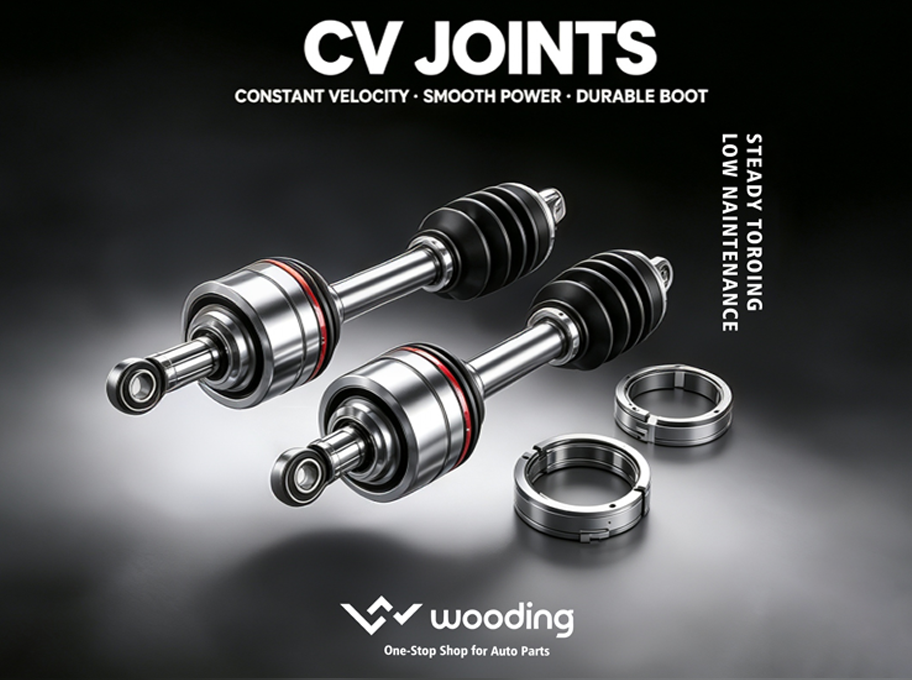
Complete CV joint kits should normally include the CV joint body, CV boot, high‑pressure grease, boot clamps, snap ring and lock nut. Some competitive‑looking quotations sell only the joint body without boot and hardware. Comparing unit prices without checking kit scope will mislead purchasing decisions.
Key Supplier Qualification Points
Working with IATF 16949‑certified manufacturers is a good starting point for drivetrain components. This certification reflects consistent production process control for safety‑related auto spare parts.
Clarify these commercial terms before releasing POs:
- Sample policy: Are pre‑production samples available for your own physical inspection? Whether sample cost can be deducted after bulk order confirmation.
- Warranty scope: Clarify warranty coverage for boot cracking, abnormal noise and early joint failure. Some suppliers exclude boot‑related damage from warranty by default, which brings unexpected claim risks for wholesalers.
- Mass‑production lead‑time and spare‑parts replenishment cycle. Fast spare‑part supply helps you handle after‑sales issues smoothly in target markets.
Pre‑order Quick Checklist for CV Joint Kit Bulk Sourcing
Run through this checklist before confirming bulk orders: ✅ Inner or outer joint type clearly defined ✅ OE numbers, spline count and ABS‑ring parameters fully verified ✅ Operating conditions confirmed: passenger car / SUV / light‑duty truck application ✅ Sample inspection: forging finish, boot material, grease quality and full‑kit accessories ✅ Factory certification and test documentation available upon request ✅ Warranty coverage, sample terms and production lead‑time agreed in advance
Closing Words
Sourcing durable CV joint kits balances accurate fitment, application‑matched performance, solid material quality and transparent supplier terms. Many importers focus only on unit price and overlook these practical details, resulting in high complaint rates and damaged local‑market reputation. Careful pre‑order checks will lower your return rate and support stable long‑term business growth.
If you are seeking a reliable source factory for aftermarket CV joint kits and other replacement auto parts, VASURE supplies OE‑equivalent drivetrain components covering thousands of vehicle models. Feel free to contact us for product catalogues, technical documents and wholesale quotation.